
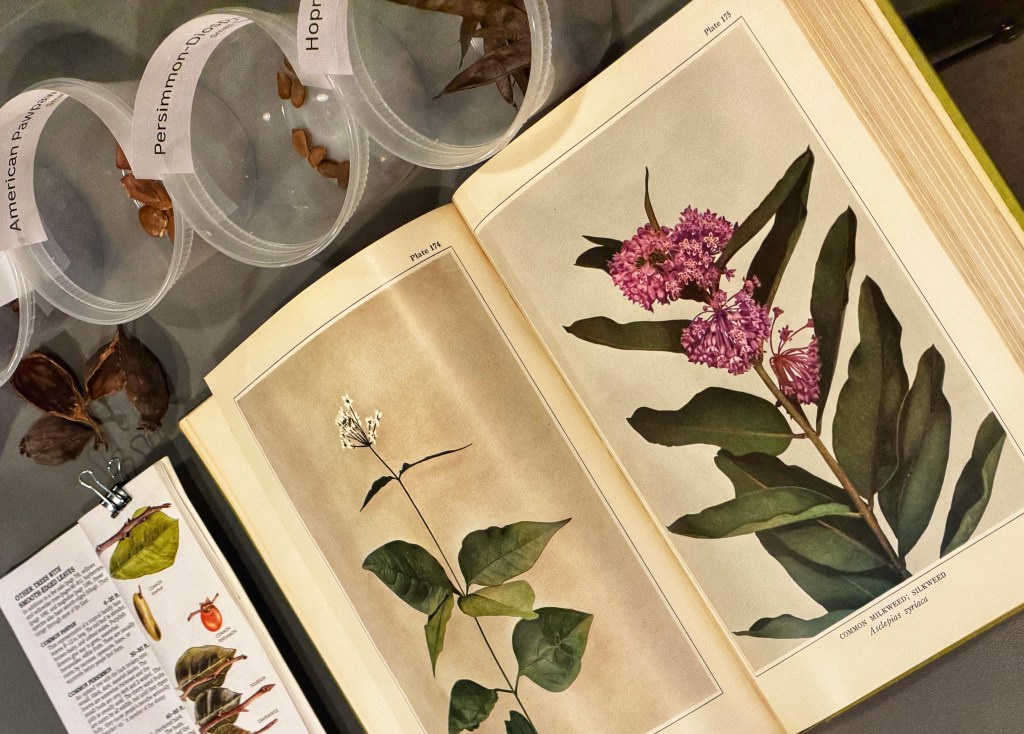
In January, we dive into one of our favorite winter planning activities: opening the seed jars we filled during our fall harvest of native plants and beginning to imagine the next growing season. We always recommend planting generously to support winter birds and wildlife, and enough seeds to collect, save and grow the next generation of plants for your garden.
Seed saving is a powerful act of stewardship and a core part of our work. Often this time of year we enjoy giving seed sowing demonstrations to community groups. We teach our clients how to work confidently with native seeds; how to recognize when seeds are ready, how to collect them responsibly, and how to sow them so they grow into healthy, resilient plants the following year.
Learning to sow your own native seeds is also one of the most affordable ways to add plants to your home garden. Fully grown native plants can be costly, but starting from seed allows you to grow dozens of plants without spending a lot of money.
One of the easiest and most effective methods is winter sowing using recycled milk jugs. With very few supplies, empty milk jugs, potting soil, water, seeds, and a bit of tape you can create mini greenhouses that nurture native seedlings through the cold months.
Winter sowing works because many native plants need a period of cold, moist conditions (called cold stratification) before they will sprout in spring. A milk jug provides exactly that: it holds moisture, lets in light and air, protects seeds from animals, and shields young seedlings from harsh weather. When temperatures warm, the seeds germinate naturally, just as they would in the wild, resulting in strong, well-adapted native plants ready for the garden.
If you have questions about how to sow your own native seeds email us at info@wildflowercity.com.
 Welcome to Wildflower City